
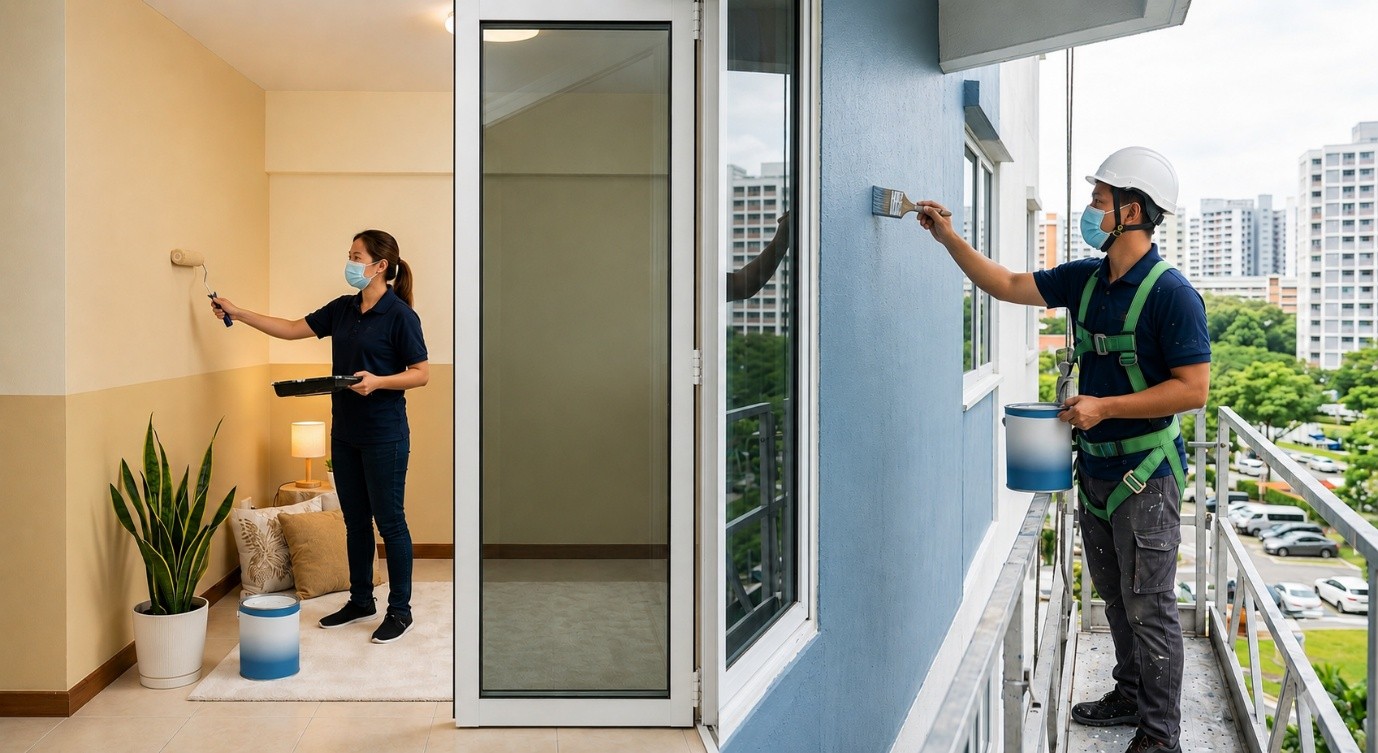
However, many property owners mistakenly believe that paint is just paint, regardless of where it is applied. In reality, Interior painting services and exterior painting services are two entirely different animals—especially under the unique, demanding environmental conditions of Singapore.
From the chemical formulation of the paint to the preparation techniques, labor requirements, and HDB or management regulations, the differences are massive. Understanding these variations ensures that you invest your hard-earned money wisely and achieve a flawless, long-lasting finish.
Let’s dive deep into the ultimate breakdown of interior versus exterior Painting Services Singapore to help you understand the core differences and make the right choice for your property.
1. The Core Purpose: Aesthetics vs. Protection
The fundamental difference between interior and exterior painting lies in what the paint is engineered to do.
Interior Painting: Aesthetics, Washability, and Safety
The primary goal of interior painting is to enhance indoor aesthetics, create mood, and provide a surface that is easy to clean. Because the walls inside your home are subjected to everyday human activity—such as fingerprints, cooking grease, and children’s scribbles—interior paints focus heavily on washability and scratch resistance. Furthermore, because you breathe the air inside your home for hours every day, interior paints prioritize safety, featuring low or zero Volatile Organic Compounds (VOCs) to maintain healthy indoor air quality.
Exterior Painting: The Shield Against Harsh Elements
Exterior painting, on the other hand, is your property’s primary line of defence against Singapore’s intense tropical climate. Exterior walls are relentlessly battered by scorching UV rays, sudden torrential downpours, high humidity, and environmental pollution. Therefore, exterior paint is engineered to behave like a protective shield, prioritizing waterproofing, elasticity, and defence against natural degradation.
2. Chemical Formulations and Paint Properties
Because their objectives differ so drastically, paint manufacturers formulate interior and exterior paints using entirely different chemical compositions.
Resin Selection
The resin is the binding agent that holds the paint pigments together and adheres them to the wall surface.
- Interior Paints: Utilize rigid resins (often epoxy or silicone-based blends). This rigidity makes the paint highly resistant to scuffs and allows you to scrub away stains easily without wearing down the paint layer.
- Exterior Paints: Formulated with soft, highly flexible acrylic resins. This flexibility allows the paint to expand and contract as the structural walls heat up in the afternoon sun and cool down during evening rainstorms. If you used a rigid interior paint outside, it would crack and peel within months due to thermal expansion.
Pigment and Fade Resistance
Singapore’s equatorial sun can quickly bleach a wall. Exterior paints incorporate specialized UV-resistant pigments designed to retain their colour vibrancy despite years of direct sunlight exposure. Interior paints do not require these expensive UV-blocking pigments, meaning they will fade rapidly if applied to an outdoor façade.
Additives (Mould, Algae, and Fungi Protection)
Singapore’s high humidity is a breeding ground for biological growth. Exterior paints are heavily infused with advanced biocides, algaecides, and anti-fungal additives to stop green algae and black mould from overtaking building exteriors. While interior paints also feature anti-mould properties (especially premium lines designed for bathrooms and kitchens), they focus more heavily on stain-resistant and antibacterial additives.
3.Surface Preparation and Application Lifecycles
At Fixlaa, our professional painters always say that a painting job is only as good as the preparation work that precedes it. The workflow and timelines vary significantly between indoor and outdoor projects.
The Interior Painting Workflow
Indoor spaces require meticulous protection of your belongings. A professional interior timeline usually looks like this:
1. Clearing and Protection: Moving furniture, taping off skirtings, and laying down canvas drops sheets to fully protect flooring and cabinets from spills.
2. Surface Prep: Scraping away old flaking paint, filling minor hairline cracks with plaster, and sanding walls down to a perfectly smooth profile.
3. Priming & Painting: Applying a high-adhesion or moisture-resistant sealer followed by 2–3 coats of premium interior paint.
4. Curing: Interior walls typically take 3 to 7 days to cure completely.
The Exterior Painting Workflow
Outdoor structures demand heavy-duty architectural restoration before a single brushstroke is made:
1. Power Washing: Exterior walls must be pressure washed to blast away accumulated dirt, algae, chalky residue, and old loose coatings.
2. Structural Repair: Patching deep concrete cracks, repairing render defects, and sealing structural joints to prevent future water seepage.
3. Heavy-Duty Priming: Applying specialized weatherproof primers that anchor deep into the concrete masonry.
4. Long Drying Windows: Exterior paints need a minimum of 24+ hours between coats to dry properly, and full curing takes 1 to 2 weeks, heavily reliant on dry weather conditions.
4. Lifespan and Durability Expectations
| Feature | Interior Painting | Exterior Painting |
| Typical Lifespan | 5 to 7 Years | 3 to 5 Years |
| Primary Threats | Scuffs, stains, moisture (kitchens/bathrooms), physical impact. | UV radiation, heavy rainfall, algae growth, structural movement. |